Richard DeTamble
The Time Traveler's WifeRichard DeTamble is Henry DeTamble’s father, a violinist whose long marriage to the singer Annette Lyn Robinson forms the emotional center of his life. After Annette dies in 1969, Richard retreats into grief and years of drinking; by the time Henry confronts him as an adult, the damage has reached his hands and ended his ability to play. He nonetheless remains part of Henry’s family story: he receives Clare Abshire with guarded warmth, gives her Annette’s rings, and later visits Henry and Clare after Alba’s birth. His arc joins music, bereavement, and estrangement to a modest but consequential return to family life.
Identity and Family
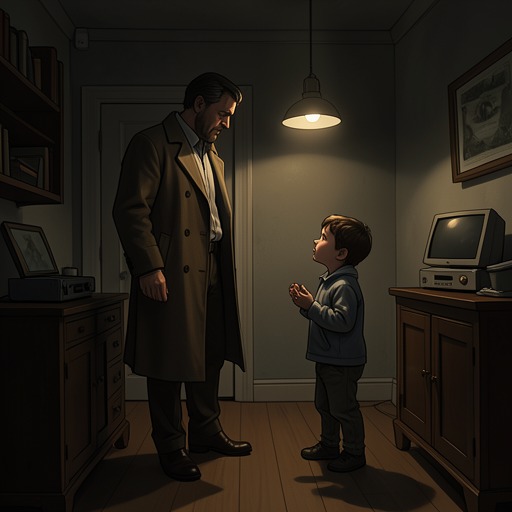
Richard is identified as Henry’s father and Annette’s husband. Both parents are musicians, and their only child grows up amid their hopes that he might share their musical aptitude. As a young child, Henry cannot make sense of a musical score, despite being able to read a newspaper at four. Annette tries to teach him, and their lesson turns into shared singing, laughter, and play. The memory establishes the household’s musical world through a small domestic scene, while also showing the affection between mother and son that Richard witnesses as a parent.
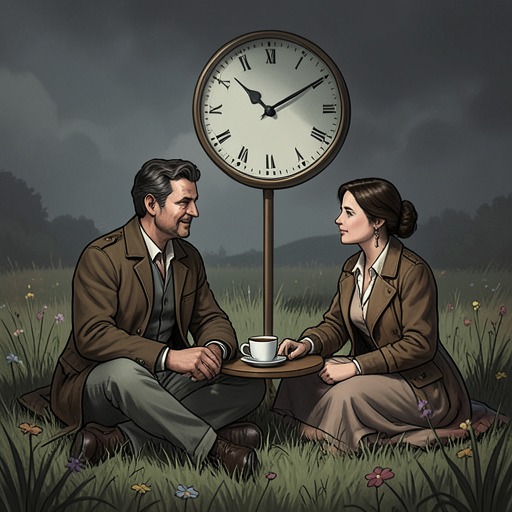
The marriage is remembered as a period of unusual happiness. When Henry travels into his parents’ past, he sees Richard and Annette as young, elegant, accomplished musicians, enjoying a life that still seems open before them. They sometimes encounter Henry without recognizing him as their son; to them, he is a local man whose appearance and age seem to change. Richard even wonders whether the apparent stranger is ill. These visits give Henry access to his mother alive, but they also place Richard’s remembered happiness beside the later grief that has altered his life.
Grief, Drinking, and the Loss of Music
After Annette’s death, Richard’s grief becomes lasting and disabling. He tells Clare that Annette had a remarkable voice, an expressive command of music, and the ability to understand how a piece should be performed. He recalls that listening to her made his own life feel larger than mere biology, and says that after she died he does not think he ever truly felt anything again. His tribute is not only a portrait of Annette’s talent; it reveals the measure of his attachment and the emotional absence that followed her death.
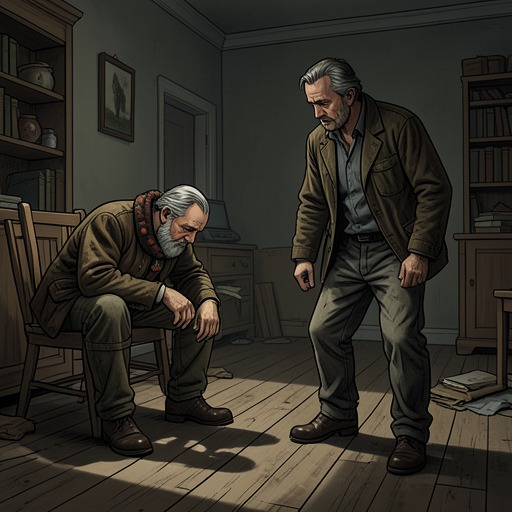
The family receives news that Richard is yelling, throwing things, and no longer practicing. When Henry goes to see him, Richard initially holds back behind the explanation that he is on sick leave. At last, he holds out his hands, which are shaking. Henry understands the consequence: after twenty-three years of determined drinking, Richard has destroyed his ability to play the violin. The loss makes visible what has happened to the musician who once shared a life with Annette. His body’s tremor, rather than an account of his feelings, becomes the concrete evidence of a grief turned into prolonged self-destruction.
Clare and Annette’s Rings
When Clare meets Richard, she encounters a tall, thin, tired man, physically unlike Henry. His long, elegant hands rest in his lap, and when he extends one to greet her, it is cold. The formal handshake marks an initially cautious meeting, but Richard soon speaks to Clare with both generosity and unsparing candor about his son. He recognizes that Henry has chosen well, then warns Clare that Henry is unreliable and volatile, and asks why someone like her would want to marry him. His welcome does not take the form of easy reassurance: Richard acknowledges the difficulty of marrying Henry while accepting Clare as the person who has chosen him.
Richard gives Clare Annette’s engagement ring and wedding band, objects kept in a drawer since Annette died. He recounts the rings’ history: the engagement ring was made in Paris in 1823 for his great-great-great-grandmother Jeanne, came to America with his grandmother Yvette in 1920, and had remained put away since 1969. Seeing it brought back into use pleases him. The gift carries family history forward while reconnecting Richard to the marriage and the woman whose memory has shaped his life. His blessing is understated, but the rings make his acceptance tangible.
Fatherhood Across Generations
Richard’s relationship with Henry includes estrangement and an eventual, restrained movement toward closeness. When Henry later sees him, Richard enters the room hesitantly, carrying flowers and a small teddy bear. Henry invites him in, and Richard approaches the newborn Alba, tells Clare that the baby is beautiful, and says to Henry that she looks like his mother. The resemblance links the newest generation to Annette, whose absence has endured across Henry’s life and Richard’s grief.
The connection continues in the family’s language and gestures. Alba calls Richard “Gramps,” a name that delights Henry because it means his father has been spending time with her. At another gathering, Henry encourages Alba to go see her grandfather. These moments do not erase Richard’s years of drinking or restore the music he has lost. Instead, they show him occupying a place in the next generation’s life, where kinship can persist even when the past cannot be repaired.
Narrative Significance
Richard’s story is presented through several angles rather than a continuous biography: Henry’s memories of his parents’ happiness, Henry’s confrontation with his father’s decline, Clare’s first meeting with Richard, and the later scenes surrounding Alba. The changing viewpoints make the gap between Richard as musician and husband, Richard as bereaved alcoholic, and Richard as grandfather legible without suggesting that any one role cancels the others.
Music provides the thread connecting those versions. Annette’s voice is the gift Richard remembers most vividly; Henry’s childhood failure to read a score distinguishes him from his parents; Richard’s shaking hands finally make continued performance impossible. Against this sequence of inheritance and loss, the rings and Alba’s resemblance to Annette offer continuity of another kind. Richard cannot return to the life he shared with his wife, but his welcome of Clare and presence with Alba show a limited renewal of family bonds.